By Peiwen Yu
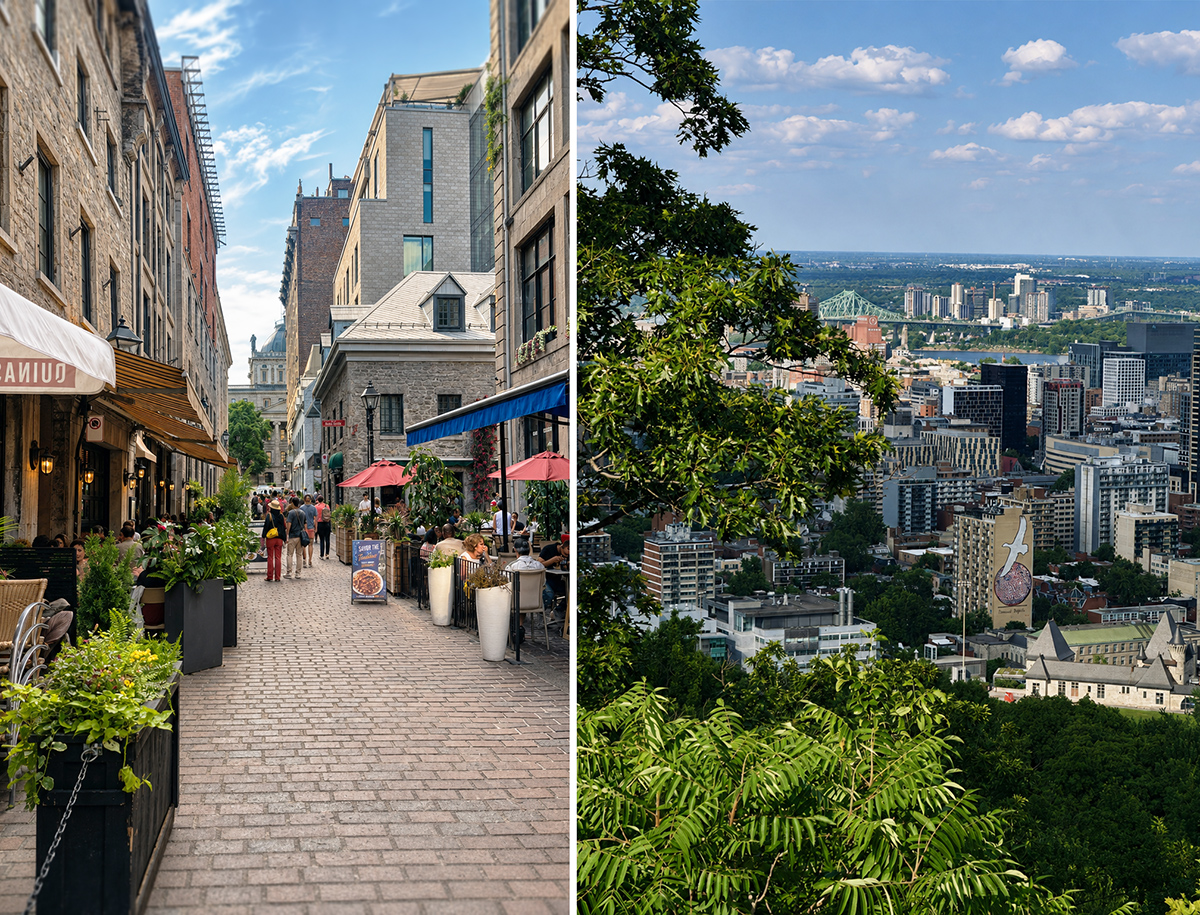
Before our summer principals meeting, I assembled a guide filled with places I hoped to see: Mount Royal, the Old Port, Parc Jean-Drapeau, Habitat 67, Mile End, Jean-Talon Market, the Lachine Canal, and more. The list was ambitious. Our schedule was equally ambitious. Three days of presentations, working sessions, professional exchange, and guided tours left little room for conventional sightseeing.
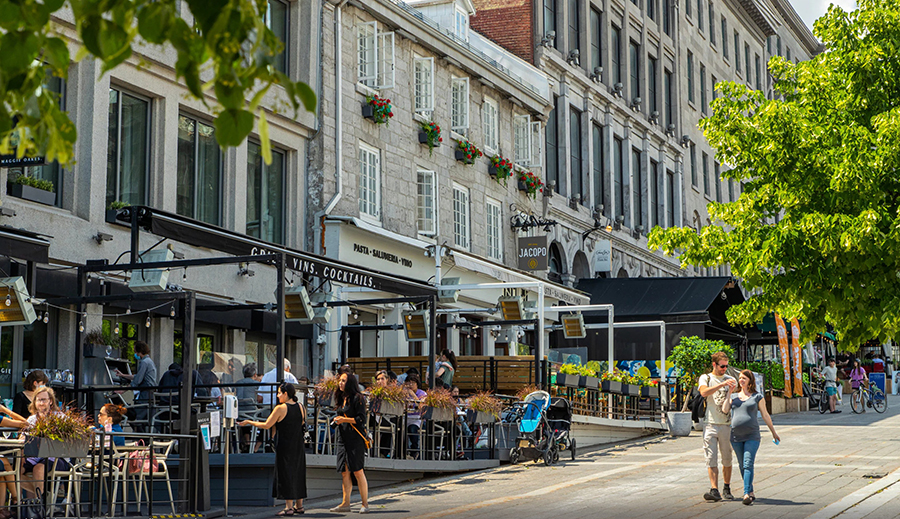
Yet Montréal did not require a checklist to make an impression. The city entered through the heat, the sound of festival stages, crowded evening streets, and the movement between meeting rooms and public spaces. My visit became less a tour of attractions and more a study of urban atmosphere.
Learning the city through its designers
The strongest part of the trip was the exchange led by Patricia and Marc. Their presentations were clear, generous, and grounded in local knowledge. On the tours, they connected design intent with the realities behind each place: history, mobility, construction, maintenance, cultural memory, and daily use. Their guidance turned a short visit into a focused urban lesson.
For a landscape architect, this form of introduction matters. A plaza or promenade reveals more when someone explains why a grade changes, how a pedestrian connection was negotiated, or how a public narrative shaped a material choice. Montréal’s public realm felt confident because design, culture, and civic life appeared closely linked. Even within a limited itinerary, I sensed a city where landscape architecture holds a visible role in public identity.
Patricia Lussier’s tour of Place des Montréalaises offered the most professionally engaging part of the visit. She traced the project back to the 2017 international multidisciplinary competition, explaining how the winning concept began with one bold urban gesture: a floating, inclined meadow spanning the Ville-Marie Expressway. The new top-deck park repairs a divide created when the roadway trench cut through central Montréal in the 1970s. Its sloping plane now forms an accessible pedestrian connection between Old Montréal, Champ-de-Mars, City Hall, and the modern downtown. Infrastructure becomes public ground, restoring a missing link in the city’s civic landscape.
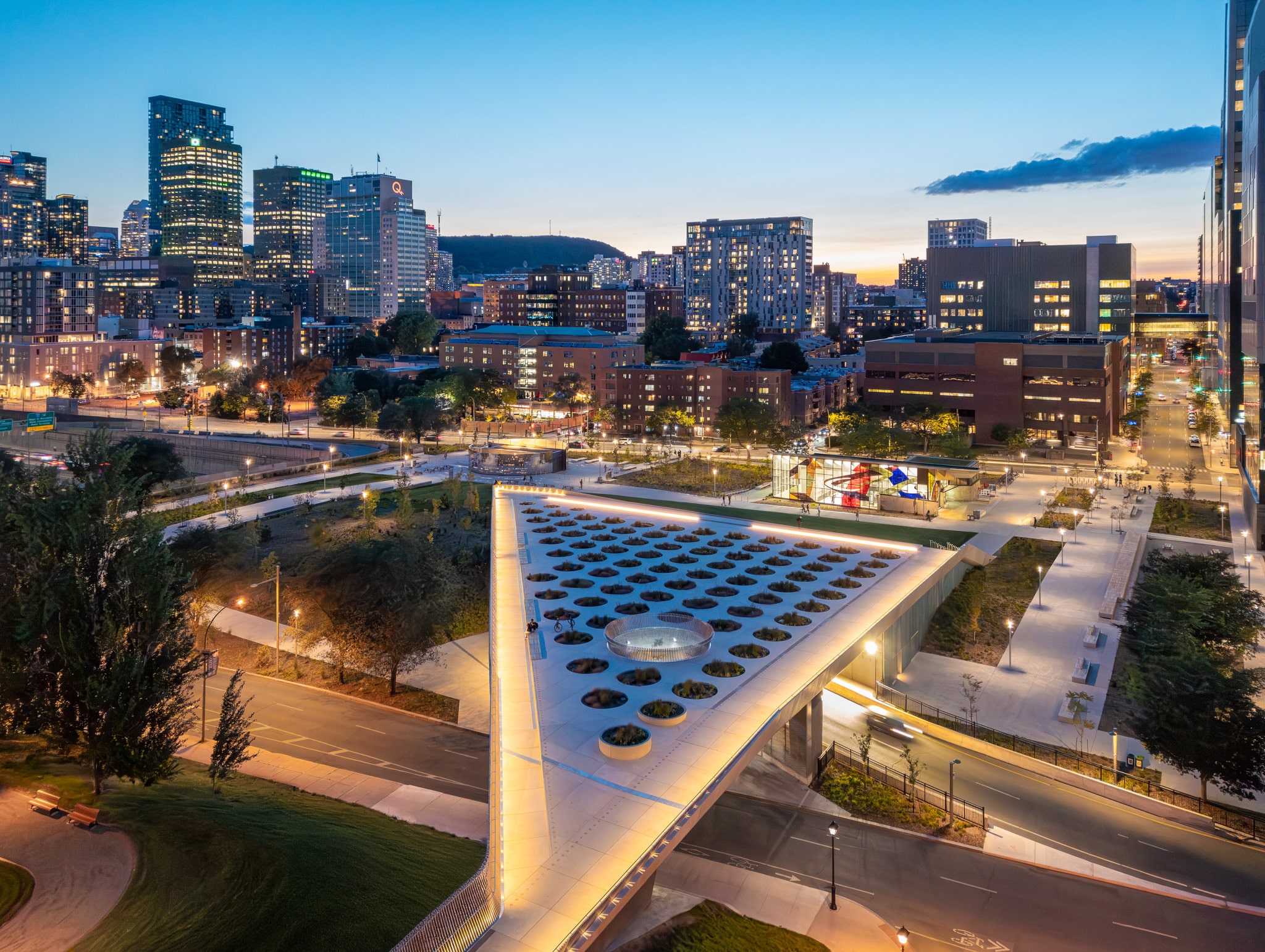
Patricia also explained how the meadow evolved from the denser field proposed during the competition. The completed design uses 86 circular planting clusters, spaced to preserve clear movement and sightlines across the inclined surface. Twenty-one indigenous perennial species represent 21 Montréal women, transforming commemoration into a living, seasonal experience. Rather than assigning one isolated garden to each woman, the species intermingle across the circles and flower in sequence. Fresh spring greens develop into layered pinks, purples, and warmer summer tones, followed by tawny grasses and amber seed heads in autumn. The restrained species palette gives the meadow visual unity, while differences in height, texture, bloom period, and color create variation from one cluster to another.
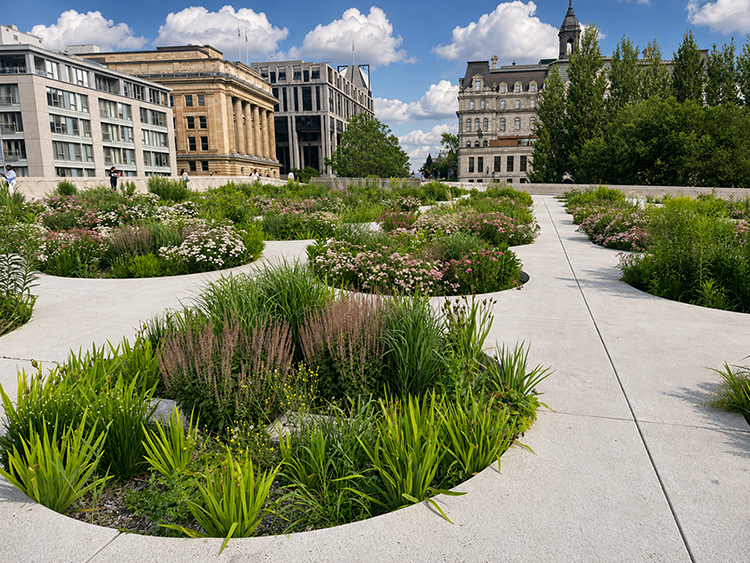
This planting strategy felt especially relevant to my own work. The circles read as precise architectural openings when viewed from above, yet the grasses and perennials soften their edges at eye level. Their repetition gives structure to the large deck, while seasonal change keeps the landscape from feeling static. Patricia’s explanation revealed how planting, structural limits, accessibility, cultural memory, and urban connectivity were developed as one integrated design idea. The project is both a piece of infrastructure and a distinctly Montréal public landscape.
Saturday’s tour with Marc Hallé, Principal of CCxA, offered another perspective on Montréal’s public realm. Marc was engaging, knowledgeable, and generous in explaining the ideas behind the work. The tour revealed a design culture grounded in conceptual clarity, technical precision, and a distinctly Montréal sense of humor.
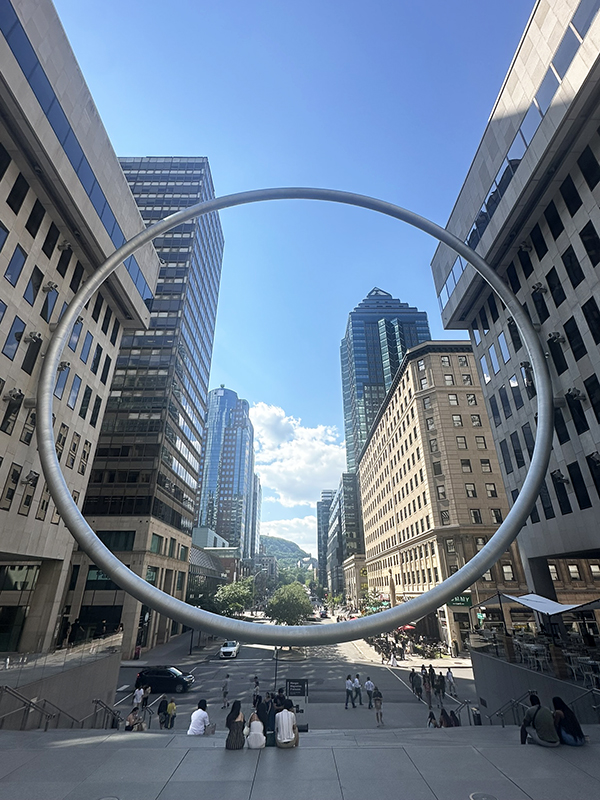
At Esplanade Place Ville Marie, the 30-meter-diameter Ring responds to the modernist geometry of Place Ville Marie, designed by Henry Cobb of I.M. Pei & Associates, while introducing a recognizable civic symbol. Suspended above the restored grand stair, it frames the one-mile visual axis along McGill College Avenue toward McGill University, Mount Royal, and its cross. At night, the illuminated Ring and cross reinforce this connection between downtown Montréal and the mountain.
The half-fountain at the northern edge of Dorchester Square expressed the firm’s more playful side. From the park, it resembles an ornate Victorian fountain suited to a nineteenth-century civic square. From the side, the surprise becomes visible: the fountain has been sliced vertically, leaving a completely flat rear elevation beside the sidewalk.
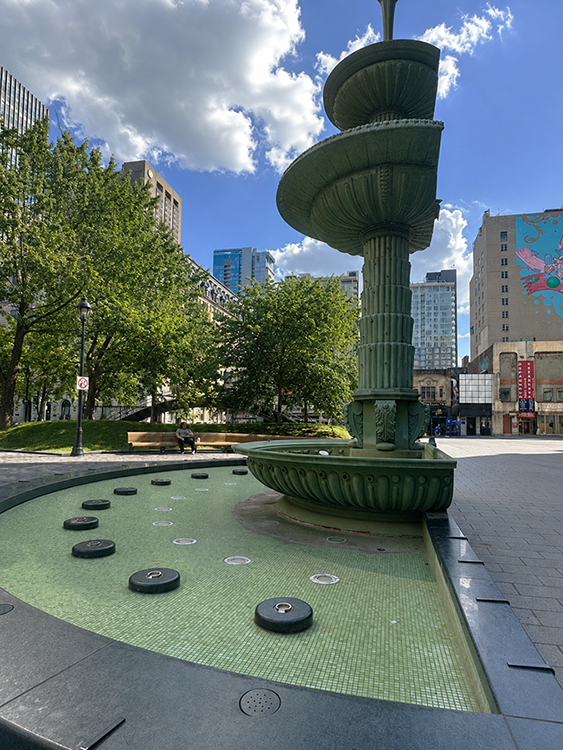
The gesture responded to a practical requirement for a tourist-bus and fire lane, while recalling how the historic square itself was cut by road widening and an underground parking garage. A small red-crested woodpecker placed on the flat side adds another layer of wit. What might have become an awkward compromise was transformed into a site-specific story about urban change.
Marc’s tour showed how CCxA approaches public space with discipline and humor. The Ring frames Montréal at the scale of the city, while the half-fountain invites discovery at the scale of a passing pedestrian.
Our Saturday evening in Montréal began at Le Balcon, a distinctive dinner cabaret inside the restored St. James United Church. The grandeur of the historic setting contrasted beautifully with the energy of the live performance. After dinner, we enjoyed a lively mix of soul, jazz, funk, and Motown before the venue shifted into a disco and dance floor. Moving from dinner to concert to dancing within one space made the evening feel spontaneous and unique.
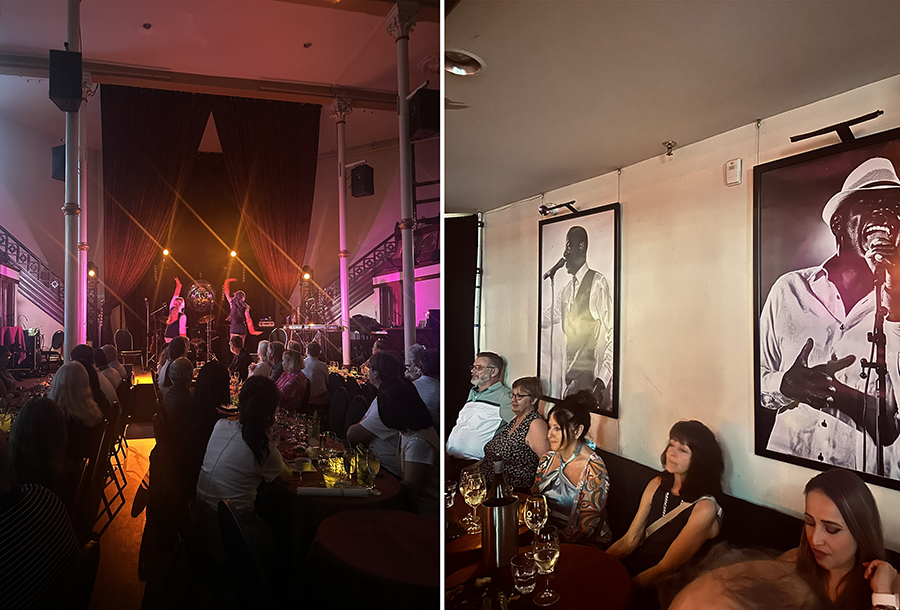
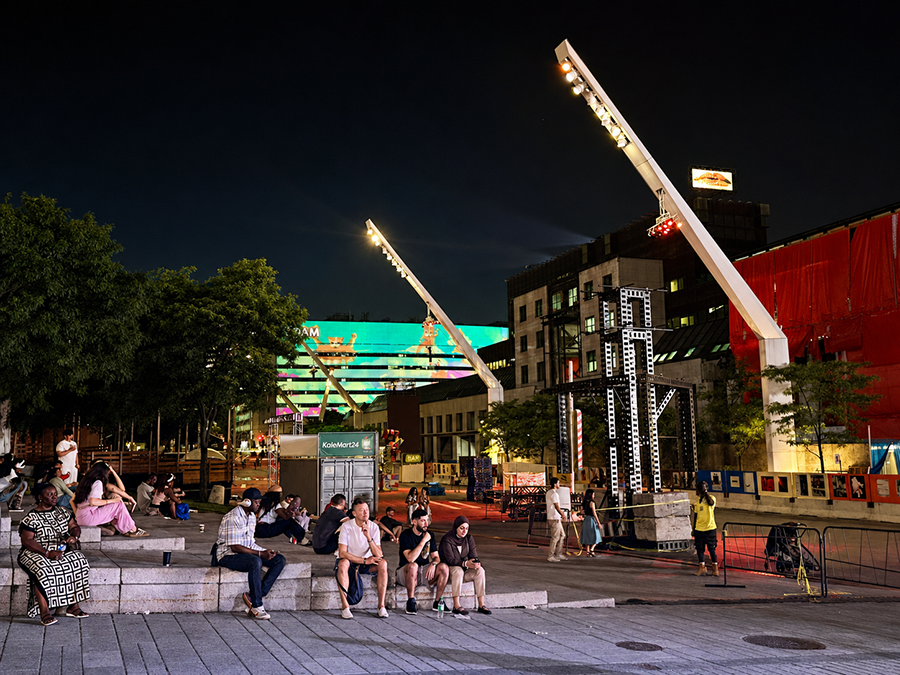
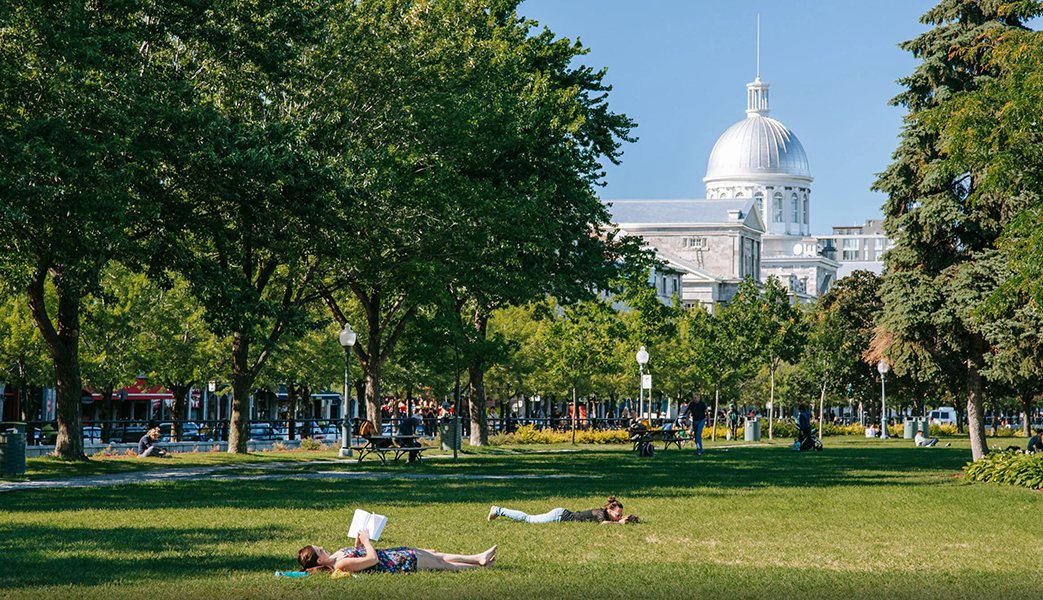
During the summer festival season, Montréal stays lively well after dark. The Old Port waterfront, public squares, terraces, and lawns fill with people listening to music, sharing drinks, picnicking, and walking beside the St. Lawrence River. Lights, performances, and warm summer evenings turn public spaces into social gathering places, reflecting the close relationship between urban design, culture, and everyday life in Montréal.