
DESIGNING RENCHI SPACE
What kinds of public spaces contribute most to memorable and attractive cities? For much of my professional practice as a landscape architect, design discussions often centered on ecology, natural systems, material performance, and spatial form. These remain essential. Yet increasingly, I find myself interested in another question: why do some public spaces become full of life while others, despite thoughtful design and substantial investment, remain relatively empty?
Rapid urbanization has produced cities of increasing scale and complexity. Landscape architecture must respond to environmental challenges while also addressing something more difficult to measure: how people experience everyday urban life.
Ren Chi offers one way of thinking about this relationship. Ren Chi, 人气 in Chinese, describes the social energy generated by the presence and activities of people. A place with strong Ren Chi feels inhabited, active, comfortable, and socially meaningful. People come, stay, meet others, observe, participate, and return.
The goal is therefore not simply to create attractive space. The goal is to create conditions in which public life grows naturally.
WHAT MAKES A RENCHI SPACE?
A successful Ren Chi space does not require expensive materials, monumental architecture, or an iconic design gesture. Many of the places people love most are relatively ordinary in physical form. Their strength comes from how successfully they support life.
A Ren Chi space tends to be:
- Popular and supportive of everyday use
- Accessible from surrounding neighborhoods and destinations
- Connected to local identity and cultural character
- Programmed to support different activities
- Socially inclusive and supportive of interaction
- Human-scaled, comfortable, and easy to use
- Emotionally positive and pleasurable to inhabit
- Informal and flexible enough for people to adapt
These qualities describe performance rather than style.

Two Ren Chi spaces might look completely different. One might be a waterfront promenade, another a neighborhood plaza, park, market street, or garden. Their materials, geometry, architecture, and planting might have little in common.
What connects them is the presence of people and the quality of life occurring there.
WHY GOOD DESIGN DOES NOT ALWAYS CREATE REN CHI
Design professions often begin with physical space. We study circulation, form, planting, materials, grading, architecture, and infrastructure.
Ren Chi suggests reversing part of this sequence.
Before asking what a place should look like, we should ask what forms of life the place should support.
Who will use this space?
What do they already do?
When do they come?
Where do they stay?
What makes them feel comfortable?
What social behaviors already exist within the surrounding community?
What experiences or memories matter to them?
These questions draw from sociology, anthropology, psychology, behavioral observation, and post-occupancy research alongside conventional design disciplines.
William H. Whyte’s studies of public space demonstrated the importance of observing what people actually do rather than relying only on what designers assume people will do. This distinction is fundamental to Ren Chi.
Design should provide the physical conditions that help social life flourish.
 The images above: Shekou Promenade, Buffalo Bayou, and Huter’s Point Park.
A BOTTOM-UP DESIGN PROCESS
Ren Chi therefore begins before physical form.
The process starts by understanding social context and identifying the social agenda of a place. Programming translates this understanding into activities. Design then provides spatial settings for those activities. After completion, observation and post-occupancy study reveal what works, what changes, and what people do differently from what designers expected.
The process forms a loop:
Defining Social Agenda → Programming → Design from Bottom Up → Post Occupancy Study → renewed understanding of Social Agenda.
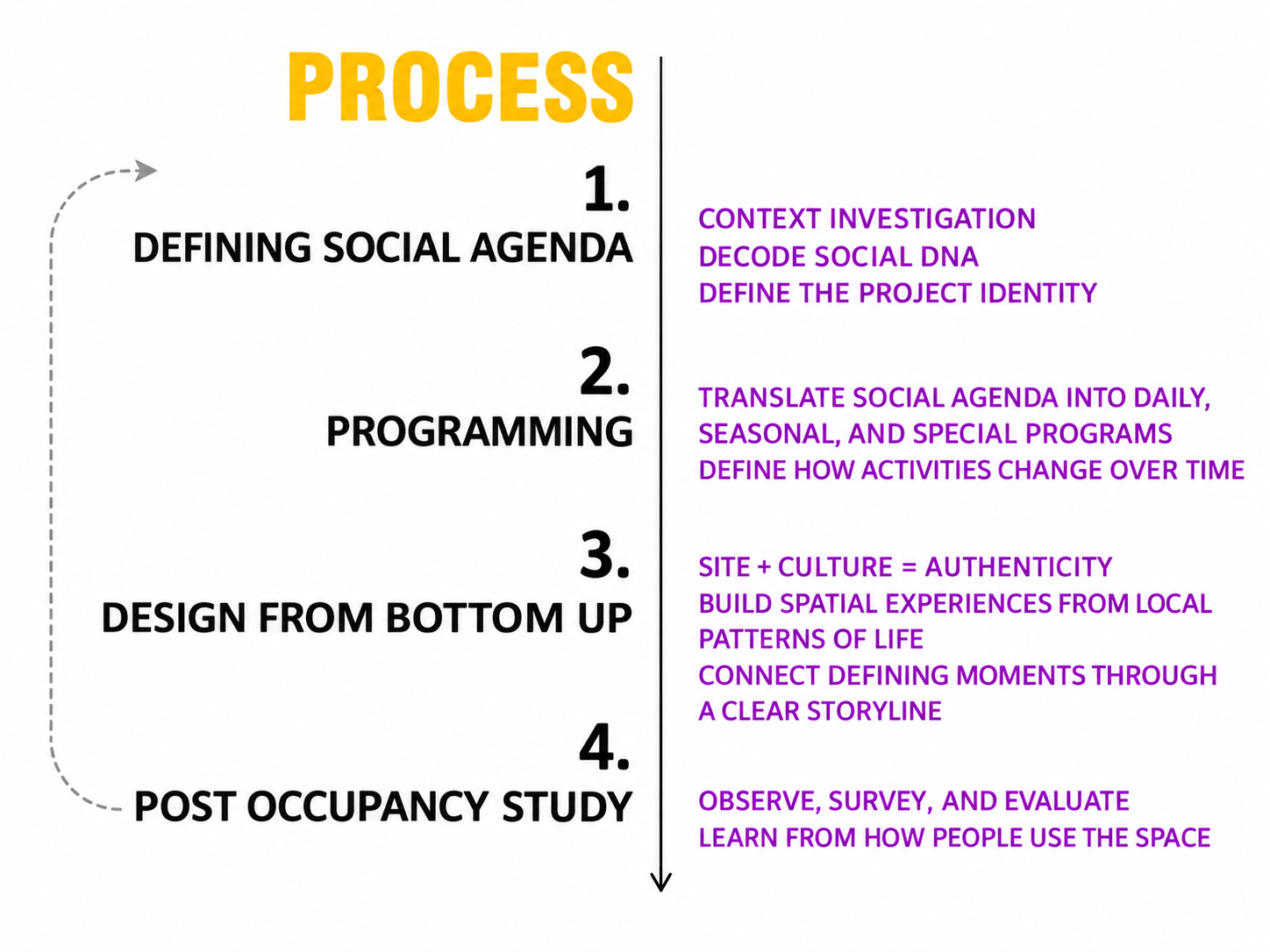 The city keeps changing. Public space should learn from that change.
SOCIAL AGENDA EMERGES FROM EVERYDAY LIFE
Every community already possesses a social structure before a designer arrives.
People walk certain routes. Children gather after school. Older residents sit in particular places. Workers eat lunch outdoors. Families meet on weekends. Informal vendors appear at certain hours. Festivals temporarily transform streets and plazas. Certain trees, buildings, waterfronts, markets, and gathering places carry collective memories.
These patterns form a kind of social DNA.
Understanding this DNA should become an early design task.
Context investigation therefore extends beyond physical site analysis. It should examine lifestyle, social behavior, cultural rituals, local memory, community relationships, and the ordinary activities that give a place its character.
The social agenda emerges from this investigation. Instead of beginning with a predetermined design image, the designer begins with a question: What kind of life should this place make possible?
Image: social agenda emerges from everyday life
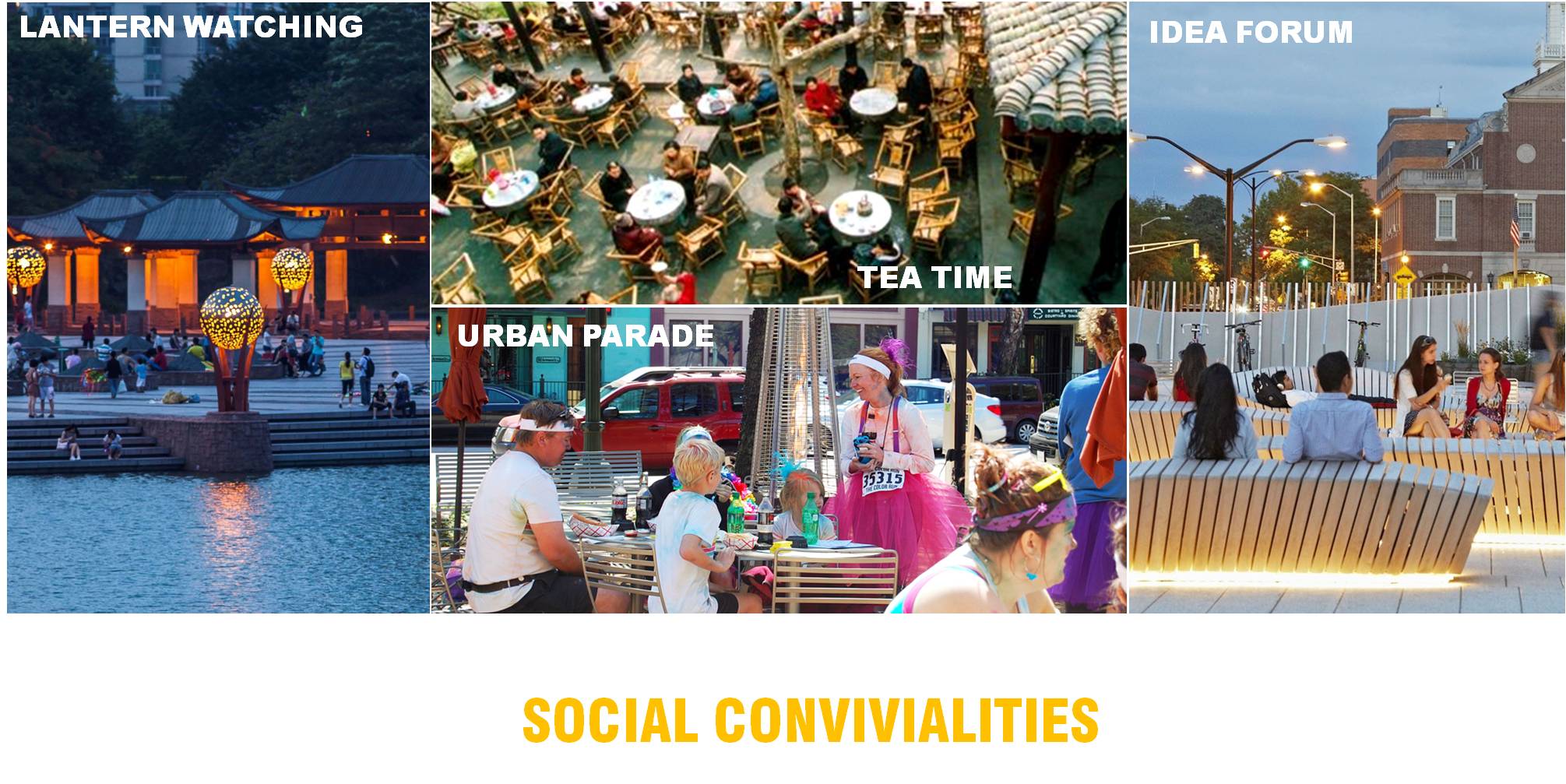
PROGRAMMING DEFINES HOW ACTIVITIES OCCUPY SPACE OVER TIME
Public space changes throughout the day.
A plaza might support commuters in the morning, office workers at lunch, children in the afternoon, outdoor dining in the evening, and community events on weekends.
Seasonal change adds another layer.
Shade matters differently in summer and winter. Gardens change with flowering cycles. Markets appear on particular days. Festivals temporarily transform circulation. Performances, exhibitions, sports, and community gatherings create moments of greater intensity.
Programming therefore links space with time.
A successful public space should support permanent programs, recurring programs, seasonal programs, and temporary events without becoming overly prescribed.
Good programming creates structure while leaving room for appropriation. People should still find their own ways to occupy a place. This balance between intention and spontaneity is one of the foundations of Ren Chi.
Image: programming defines how activities occupy space over time
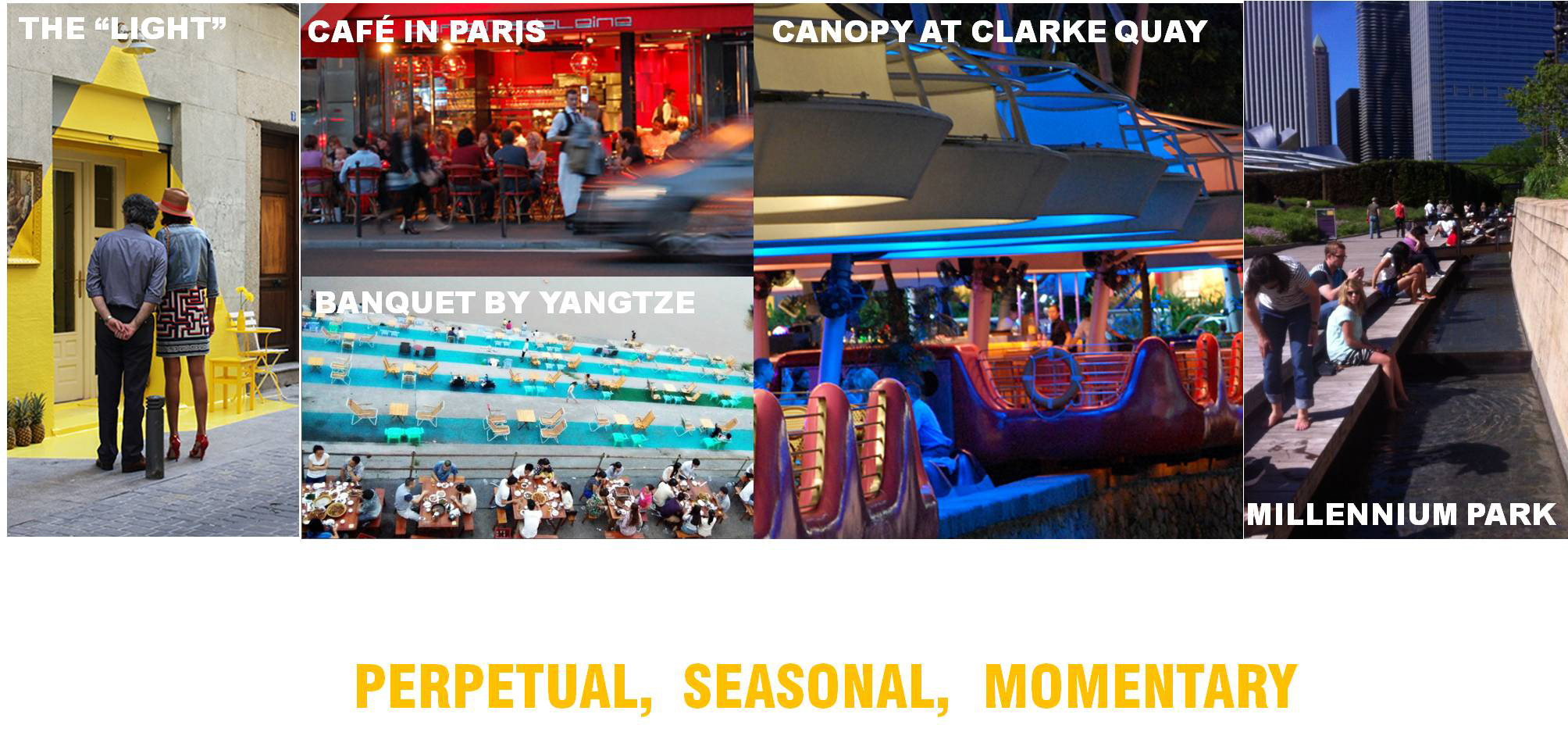
AUTHENTICITY GROWS FROM CONTEXT, CULTURE, AND PEOPLE
Authenticity does not come from reproducing historical styles or attaching cultural symbols to contemporary development.
It grows from a deeper relationship between site, culture, and everyday life.
Climate influences shade, planting, material, and patterns of use. Local food culture influences streets and gathering spaces. Family structure influences seating and recreation. Transportation patterns influence how people enter and move through public space. History and memory influence what communities value and choose to preserve.
These conditions should shape design decisions.
Site + Culture = Authenticity.
This does not mean design should resist change.
Cities evolve, and contemporary public space should support new forms of life. Authenticity comes from allowing change to grow from local conditions rather than imposing a generic image of urbanity. A place feels authentic when people recognize something of themselves within it.
Image: authenticity grows from context, culture, and people
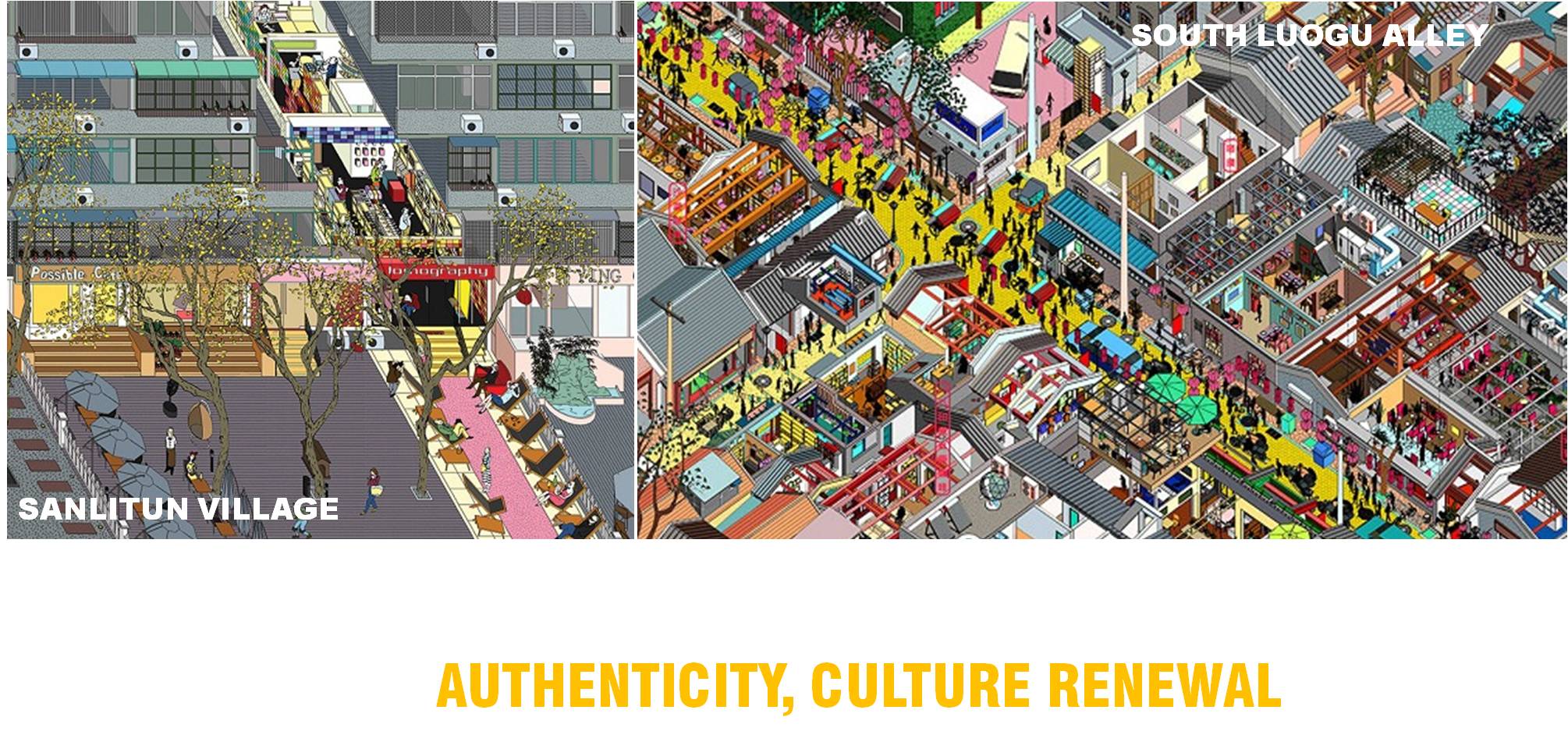
DESIGN FROM BOTTOM UP
Bottom-up design does not mean the absence of design.
It means physical form follows an understanding of human behavior.
Once the social agenda and programming framework become clear, landscape architecture provides the spatial structure needed to support them.
Paths connect activities. Seating encourages staying. Shade extends comfortable use. Planting creates atmosphere and seasonal change. Water supports environmental and sensory experience. Edges influence gathering. Small spaces allow intimacy. Larger spaces accommodate collective events.
Together, these elements choreograph a sequence of social experiences.
The designer still shapes form, proportion, material, movement, and visual character. The difference lies in where those decisions begin.
They begin with life.
POST OCCUPANCY: LEARNING FROM REAL LIFE
A drawing predicts how people might use space.
Completed public space reveals what they actually do.
Post-occupancy study therefore belongs within the design process rather than outside it.
Observe.
Survey.
Evaluate.
Where do people gather?
Which seats remain empty?
Which paths become shortcuts?
Where do spontaneous activities appear?
What happens at different hours, seasons, and events?
These observations provide knowledge for future design.
Ren Chi is not a finished design condition, but an evolving relationship between people and place. A successful public space creates enough structure to support life and enough freedom for life to change it. That, for me, is the foundation of designing Ren Chi Space.
Great article