
by Peiwen Yu
As compelling as historic sites are, travel often draws my attention to the flow of everyday life, where routines unfold with intention, grounded and steady, far from a pace driven by speed and efficiency. Cities reveal themselves through daily rituals, not landmarks.
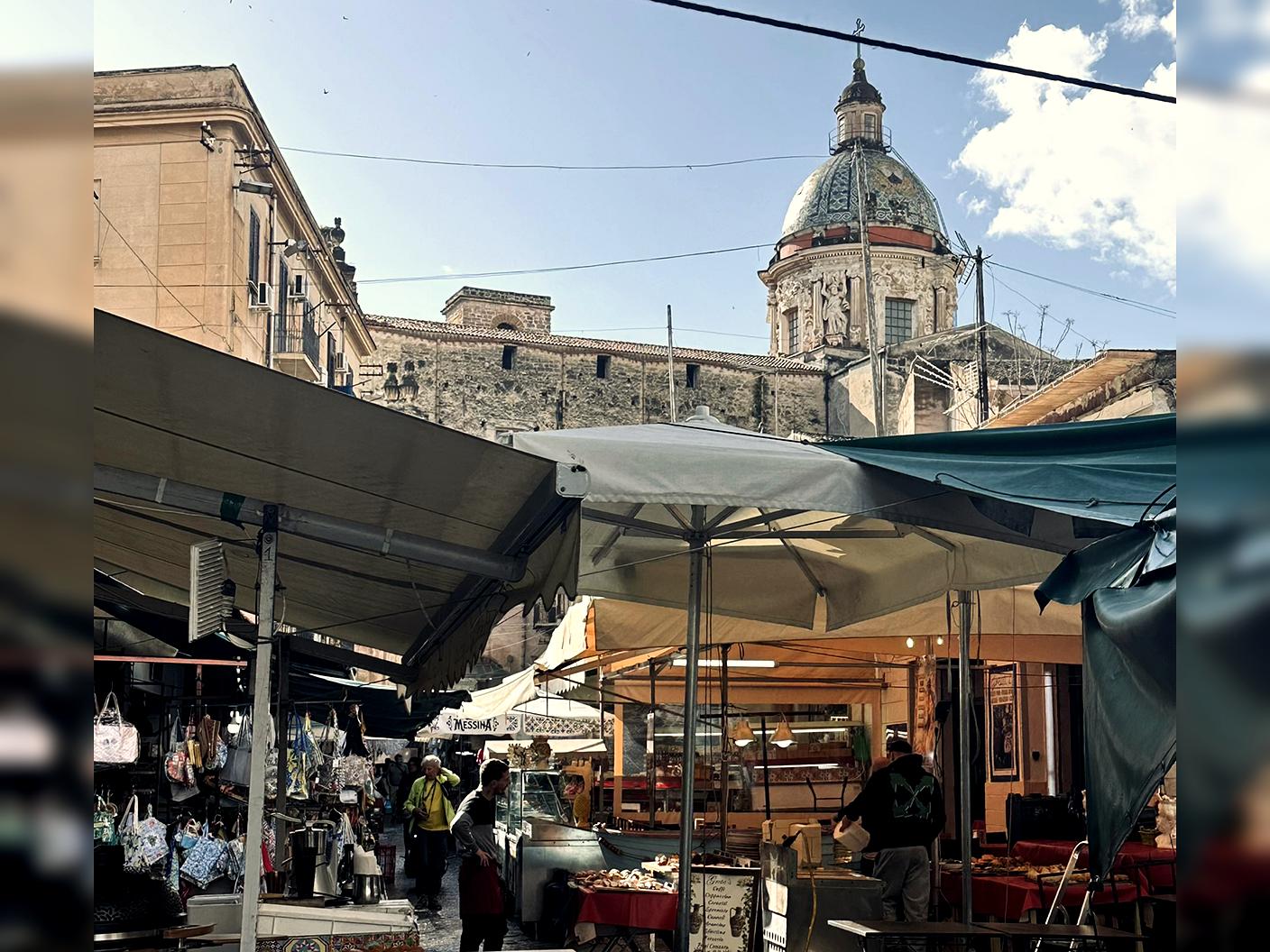
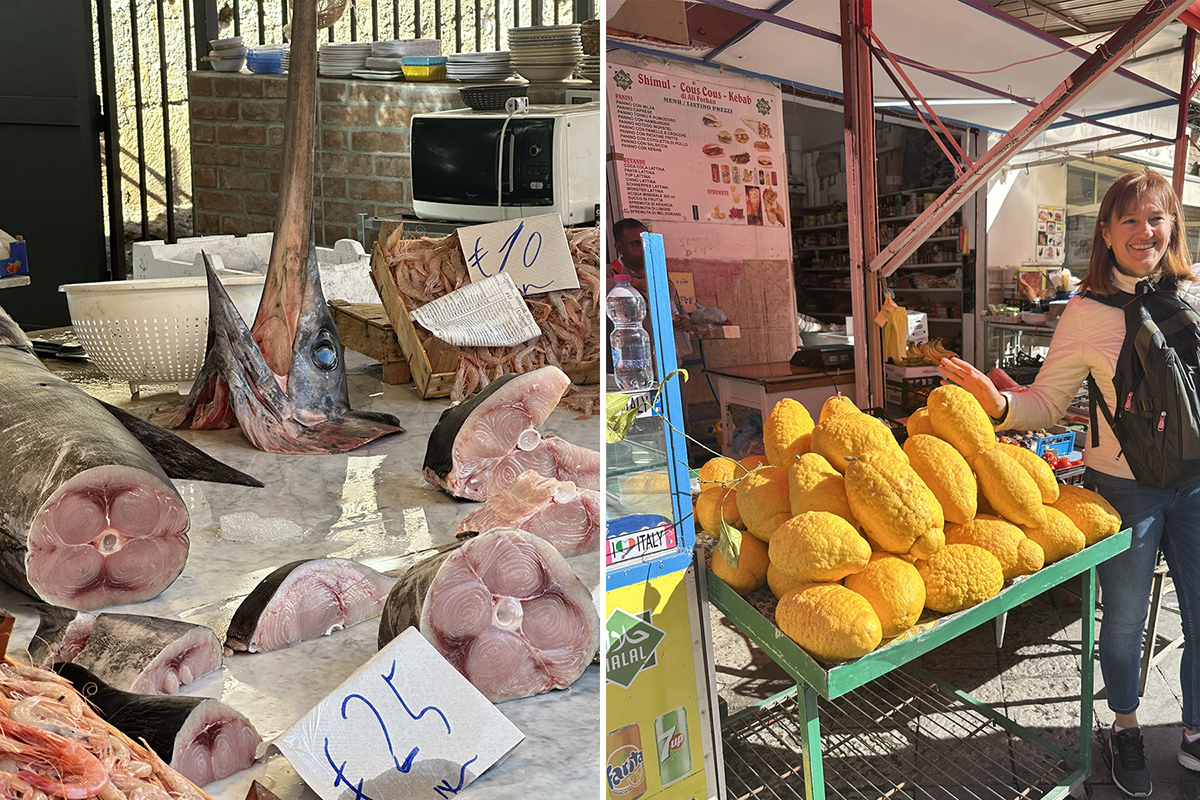
During a recent trip to Naples and Palermo, this came into focus. In Naples, along Via Toledo and into Quartieri Spagnoli, streets compress sound, movement, and daily exchange into a tight, continuous flow. In Palermo, the scene shifts to Ballarò Market, where the city opens outward. Stalls line the streets with fresh produce and seafood, vendors call out prices, and transactions happen face to face in real time. The market spills into surrounding streets, blending with homes and small shops, as daily life unfolds in full view, dense and continuous.
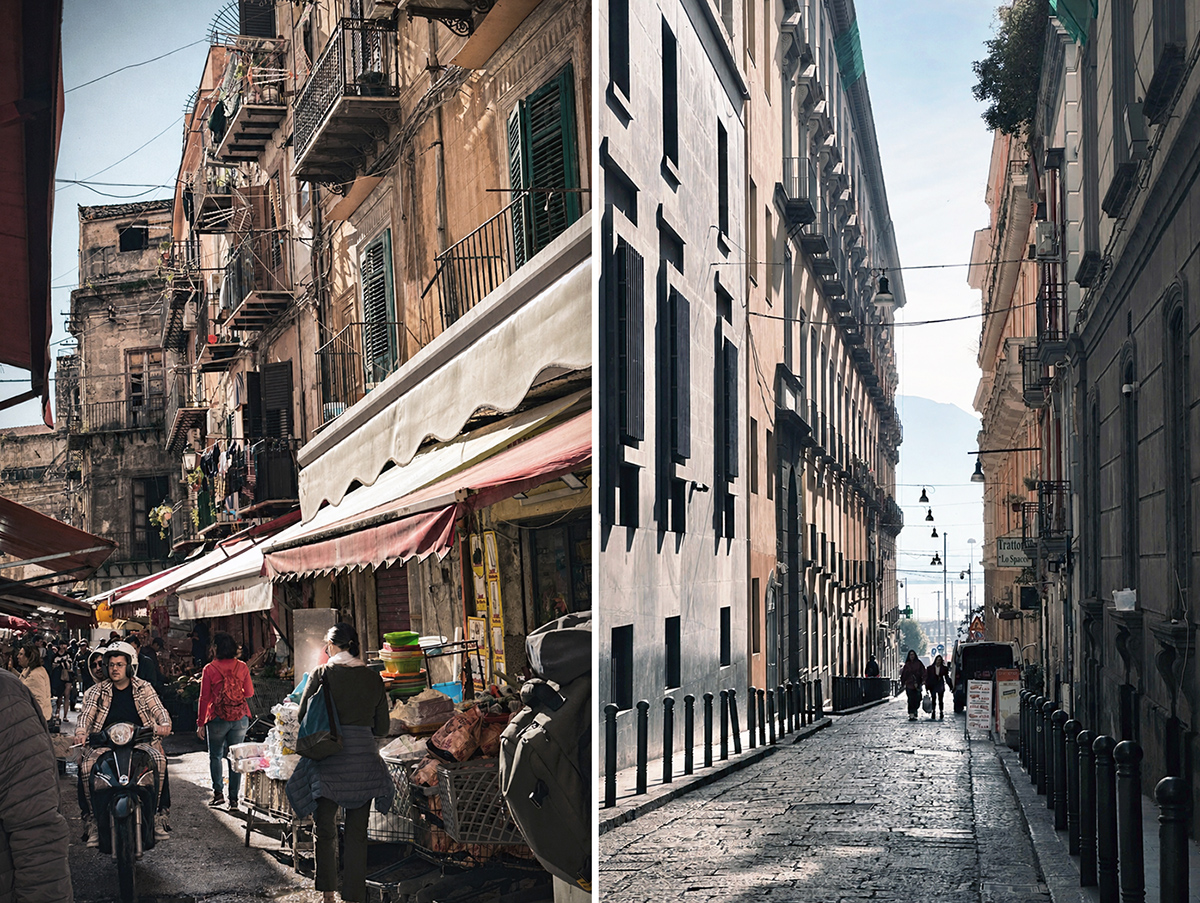 Ballarò Market, Palermo, and a narrow street in Naples
In these settings, small rituals begin to stand out, picking up fresh bread, pausing at a produce stall, or standing at a café counter before returning to the street. Markets offer a direct way in. In Paris, the baguette reflects a quiet respect for daily life. In London, Borough Market gathers voices and movement. In Vienna, the café extends this shared public habit. Following these patterns leads deeper into places like Ballarò Market, where history and daily life overlap. Stepping away from an itinerary and moving through these spaces brings the city into closer reach, shaped by the people who live in it each day.
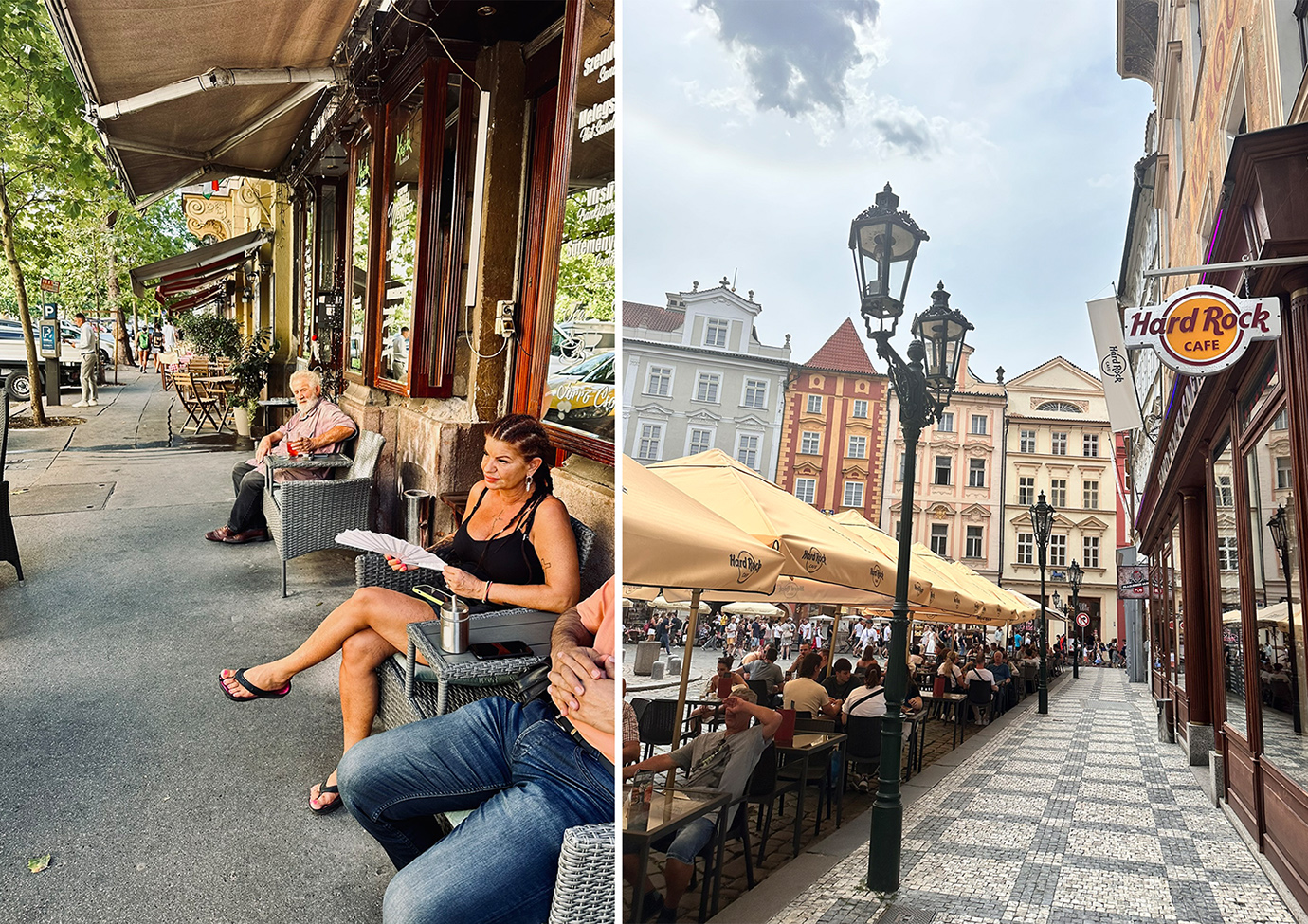
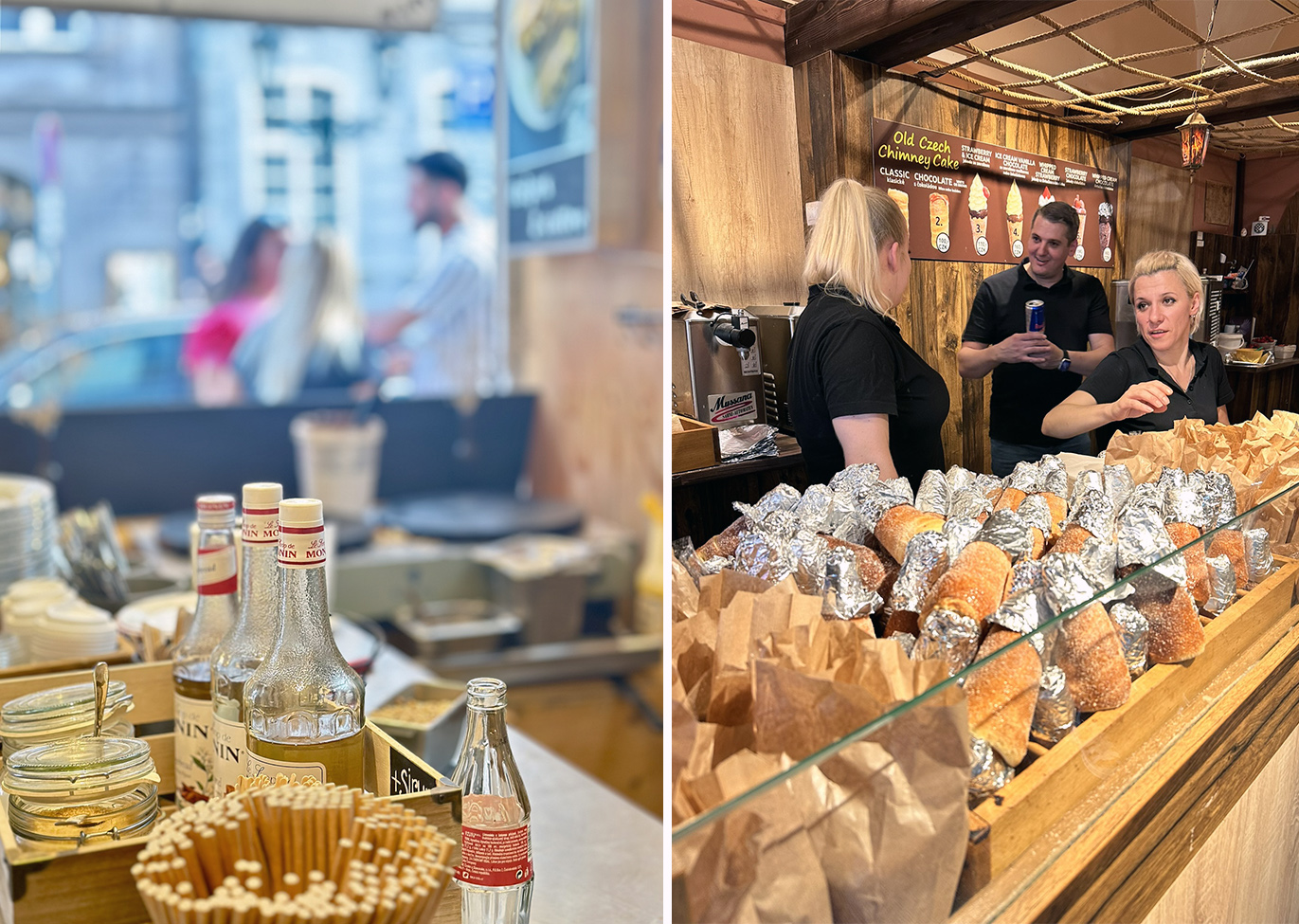 Neighborhood food spot in Prague
Ballarò: Palermo’s Living Market
Ballarò carries Palermo’s history into everyday life. A short walk from my B&B, it pulls you into a dense and textured environment. The market traces back to its Arab suq origins, still visible in the narrow alleys and layered spatial rhythm. Vendors call out, goods spill onto the street, and the market operates as both commerce and social space.
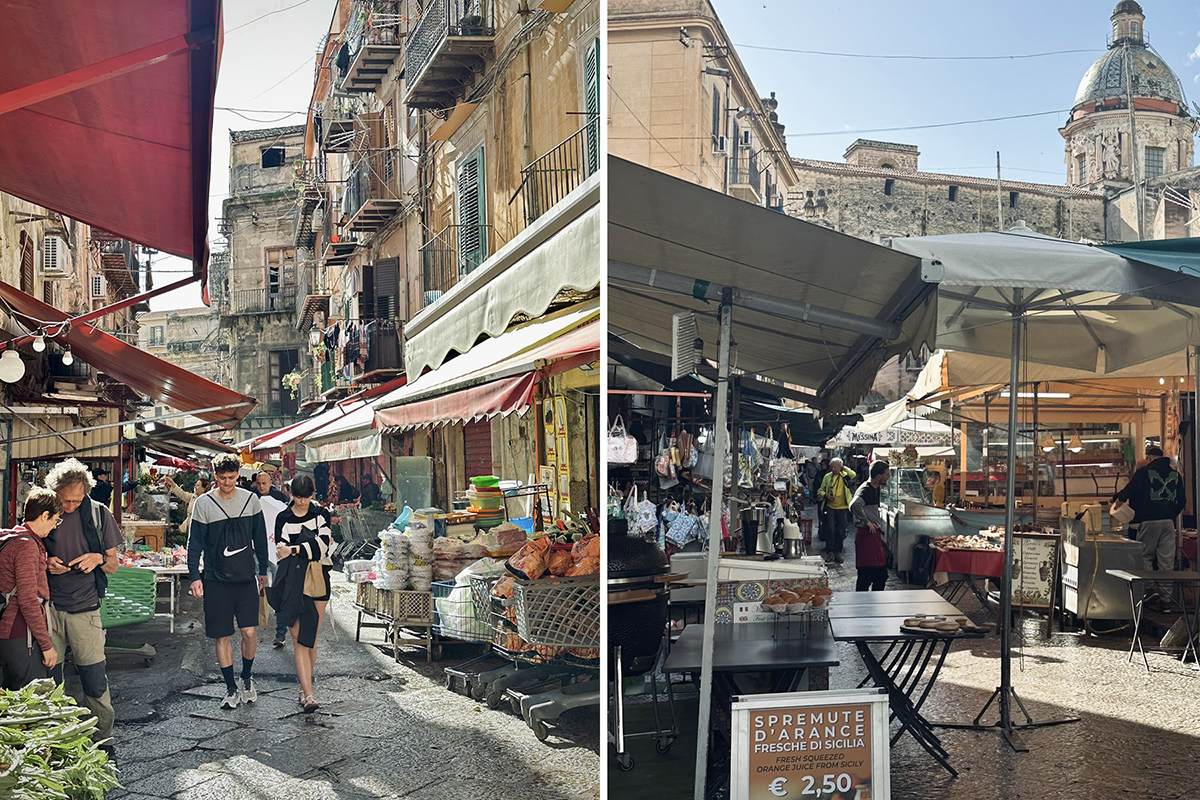
Light filters through tarps above, catching the surface of citrus, vegetables, and fresh fish. Swordfish glints on metal tables. Piles of oranges and lemons stack against worn stone walls. The setting feels direct and alive. This is not a market shaped for visitors. It is where people shop, eat, and move through their day.
Because I stayed nearby, I returned at different times. Morning felt focused, with fresh produce arranged in clear order. By midday, the pace shifted. The market grew louder and more crowded, with street food taking over. I tried panelle and crocchè in a bun, then arancine filled with ragù. I skipped pani ca meusa and chose grilled octopus instead, smoky and tender. Each bite connected back to the rhythm of the place, simple, direct, and rooted in daily habit.
Paris: Bread and the Everyday
In Paris, the market takes on a quieter tone. Along a Sunday street, vendors sell prepared meals, roasted chicken, potatoes, and seasonal vegetables. Nothing feels elaborate, yet everything feels considered. The food reflects a steady baseline of daily life, built on consistency and care. Nearby, flowers share the same street. Hydrangeas appear in full clusters, sold in generous bundles. Their presence feels ordinary, yet intentional. They reflect a way of living where beauty remains close to daily life, not set apart from it.
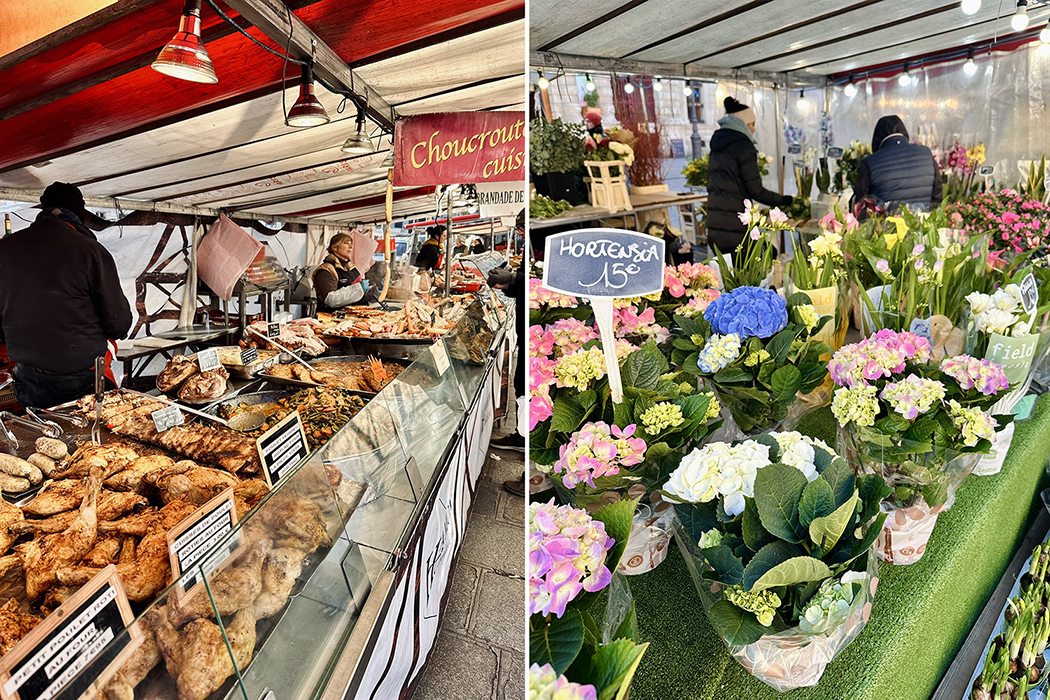 Sunday market in Paris
Nowhere is the French reverence for simplicity more striking than with the baguette. Imagine: every day, across France, an estimated 30 million baguettes are sold. This culinary cornerstone, present on every dining table—from the humble bistro to the three-Michelin-star palace—is composed of only four elemental ingredients: water, salt, flour, and yeast.
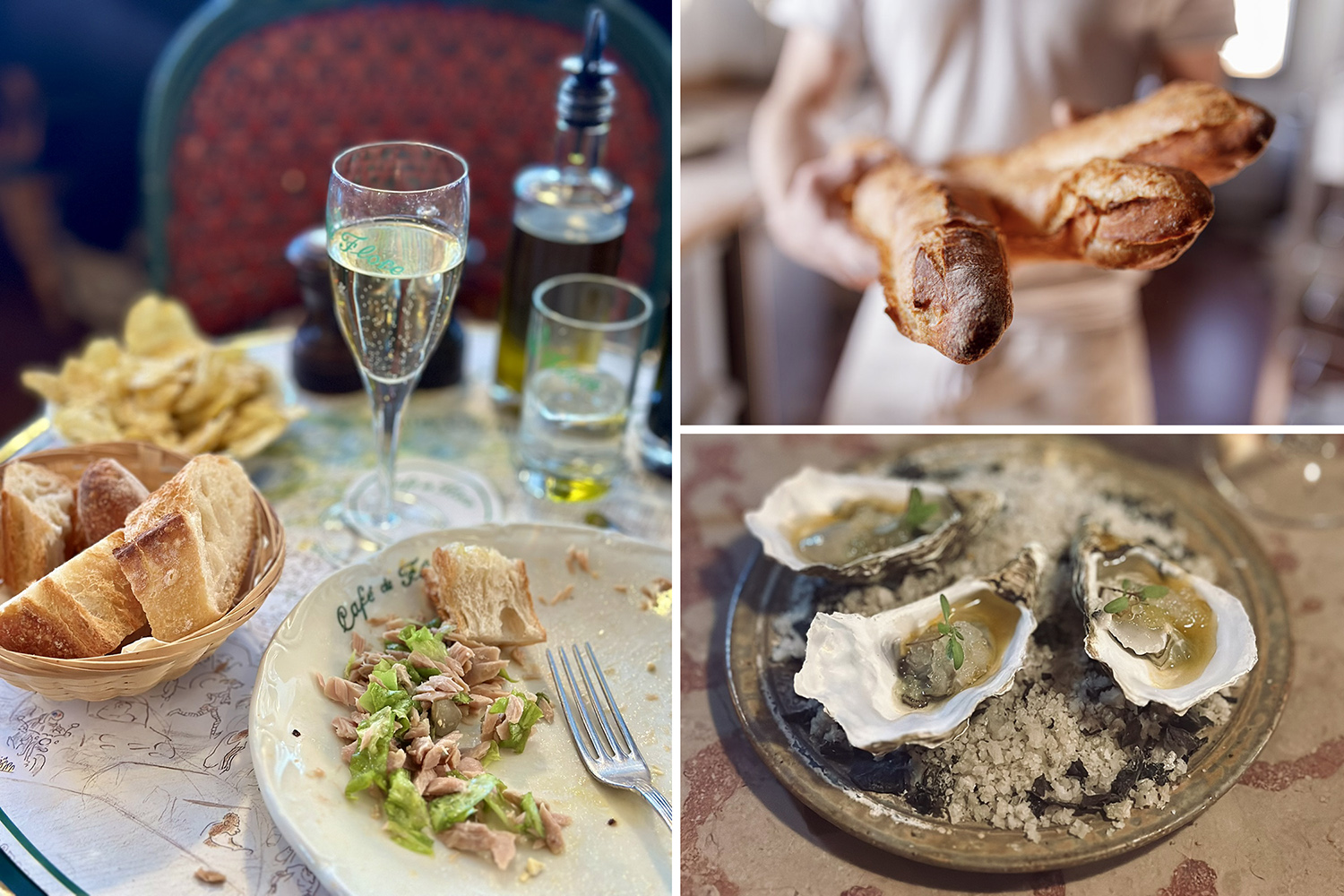
This is the great cultural twist: in a nation that elevates cuisine to the highest art, whose chefs pursue ever more complex and expensive flavors, the daily anchor of the diet is this perfect, unpretentious loaf. The baguette embodies an elegant contrast, a statement that the foundation of great pleasure is often found in pure, unadulterated essentials. It serves as a democratic, grounding element that connects all levels of French society, proving that profound artistic creation can emerge from the simplest of materials.
London: Material and Movement
Across the Channel, London’s famed Borough Market, nestled beneath the great railway bridge, offers a different, yet equally authentic, lesson in simplicity. This market is a cathedral of the real—where the focus is fiercely on the quality of core ingredients. What is truly “London” or “British” here isn’t exotic imports, but rather the traditional English produce, cheeses, meats, and charcuterie—the very materials that define local flavor. The presence of high-quality, local dairy, truffles, and seasonal vegetables drives the market’s cuisine. The market supports both daily shopping and quick meals. Office workers stop by for lunch. Locals return for ingredients. Visitors move through, drawn by the energy. The space holds all of this without losing its core purpose.
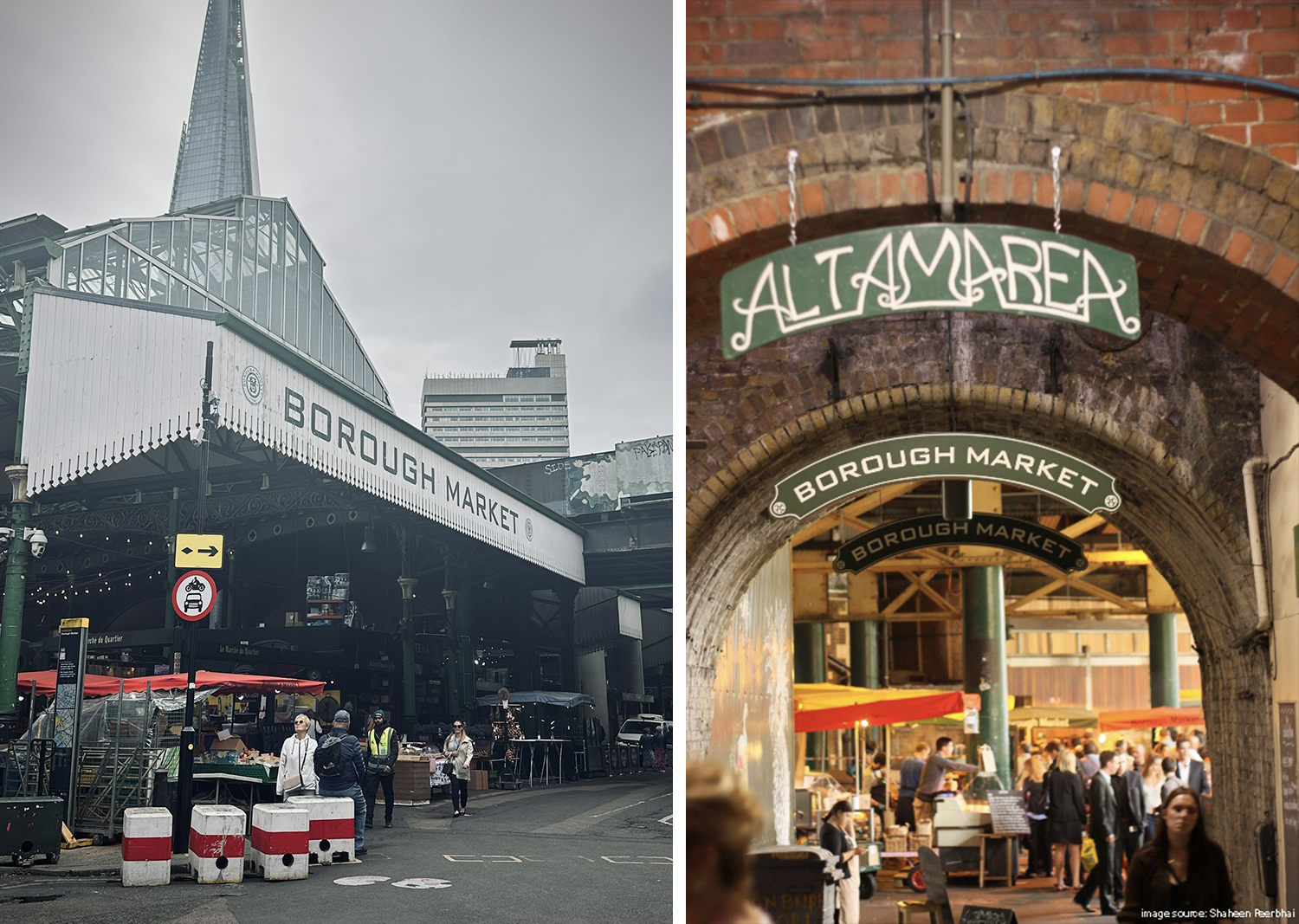 Borough Market, London, beneath the railway arches, where daily life gathers around food
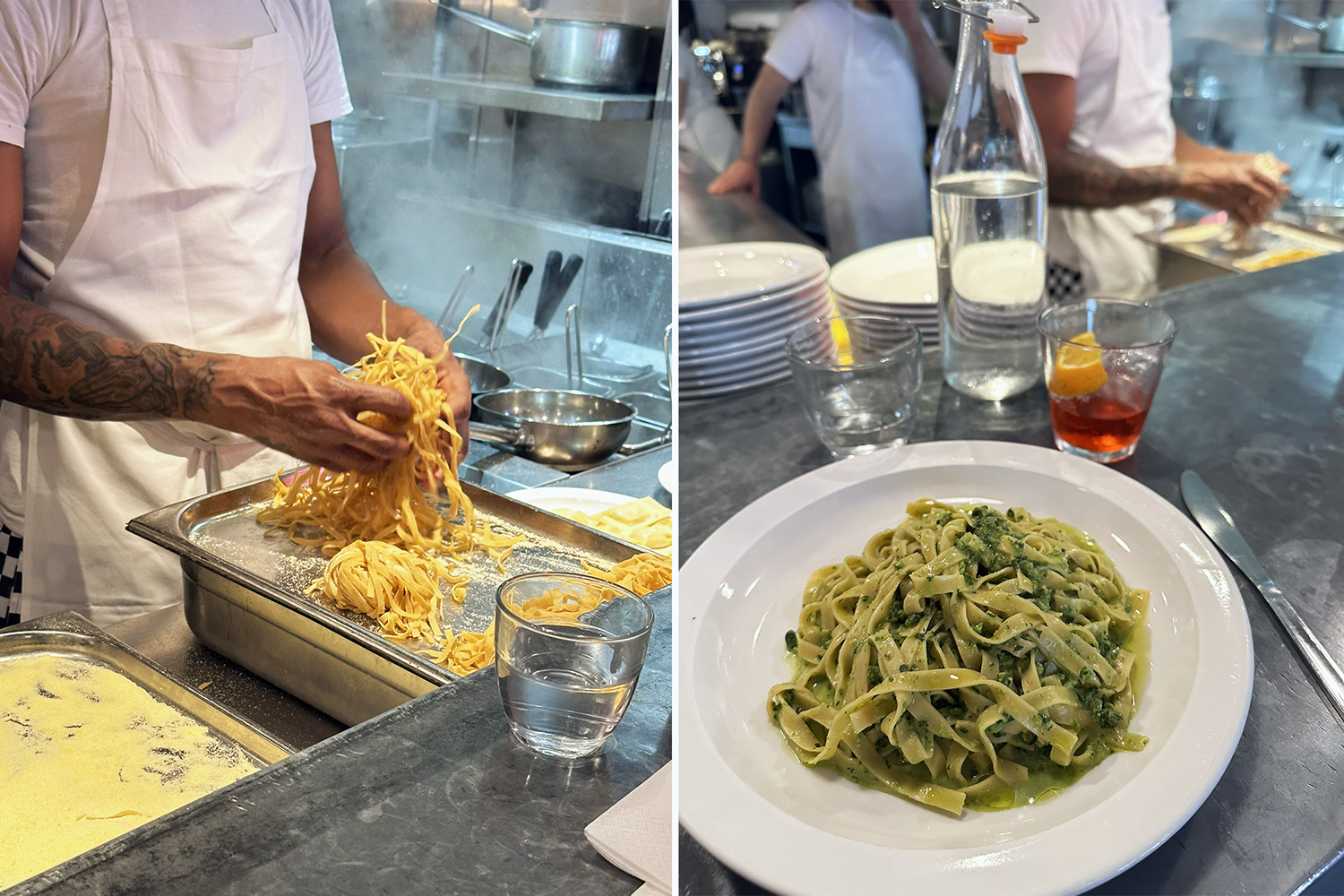
Here, a specific, vibrant corner is dedicated to this philosophy: Padella. This fresh pasta spot, a sensation in London over the last decade, is part of a culinary revolution rooted in an old story. The genesis of London’s fresh pasta revival traces back to the 19th-century Little Italy of Clerkenwell, where Italian immigrants first brought the traditions of handmade and filled pasta.
Coffee as a Daily Ritual
Coffee carries the same clarity found in markets and bread. In Naples and across Italy, the ritual is brief and structured. People stand at the counter, order an espresso, drink it in a few sips, and step back into the street. The interaction is quick and consistent, repeated each day with little variation. The bar becomes a point of contact, not a place to stay.
In Vienna and Budapest, the habit shifts. The café becomes a place to linger. Tables, newspapers, and quiet conversation shape the space, and a single cup stretches over time. People read, write, or sit in thought. The setting supports a slower pace, where drinking coffee blends into a broader daily routine.
In Paris, the café sits between these two modes. Some stand at the counter, others take a seat facing the street. Drinks offer a brief pause within the movement of the city. The terrace folds into the street, a place to observe while remaining still. Coffee, and drinks more broadly, connect to both motion and pause.
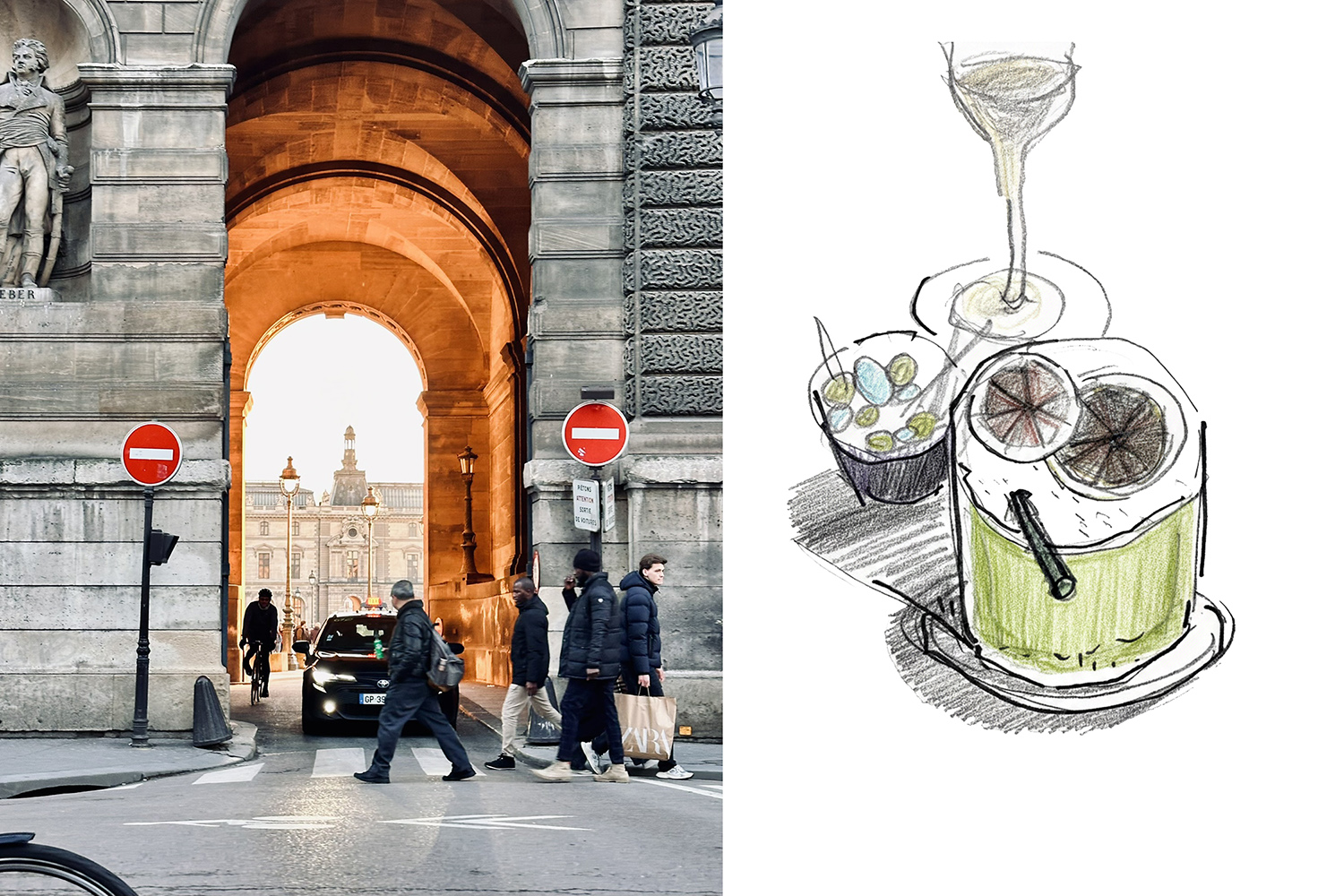 Fast-moving Paris, with a drink along a walking tour in Montmartre
Returning to the Everyday
Across these places, markets, bread, and coffee form a shared structure of daily life. Each city expresses it in its own way, shaped by culture, history, and pace. The pattern stays consistent. Routine sits at the center of how people move through the day. When I step away from a fixed itinerary and follow these patterns, the city becomes clear. A morning purchase. A brief exchange. A familiar stop. These moments build a direct understanding of place.
Daily rituals shape how a city runs. They set pace, define how long people stay, and guide how space is used. This is where design has impact. Cities grow through repetition, not through tourism landmarks. A market stall, a quick espresso, a daily loaf. These actions organize movement and connect people to place. Spaces that support them do not rely on spectacle. They rely on shade, seating, walkable edges, and comfort across the day. Well-designed everyday settings hold identity. People return without effort. Over time, these repeated acts build shared memory and sustain the life of the city.